
Hold tight, here comes a long deep research article on NIO~
The Beginning: Rethinking After an EV Road Trip
Last month, I took an 800-kilometer long road trip with my nearly 4-year-old Leapmotor C11. The journey was pleasant, but an hour-long queue for charging at a service station gave me firsthand experience of EV “energy anxiety.”
The core of the anxiety wasn’t slow charging, but the uncertainty of waiting. At that moment, I thought: if battery swapping were available, it would not only be fast but also allow advance booking, eliminating this sense of uncertainty.

This experience prompted me to re-examine NIO—a company I had held shares in for years, from following closely to being “numbed by losses” and almost ignoring it afterward. I discovered that during the two years I neglected it, its battery swap stations grew from over 1,000 to 3,500, highway swap stations exceeded 1,000, and it even established a swap route from Highway 318 to Mount Everest.
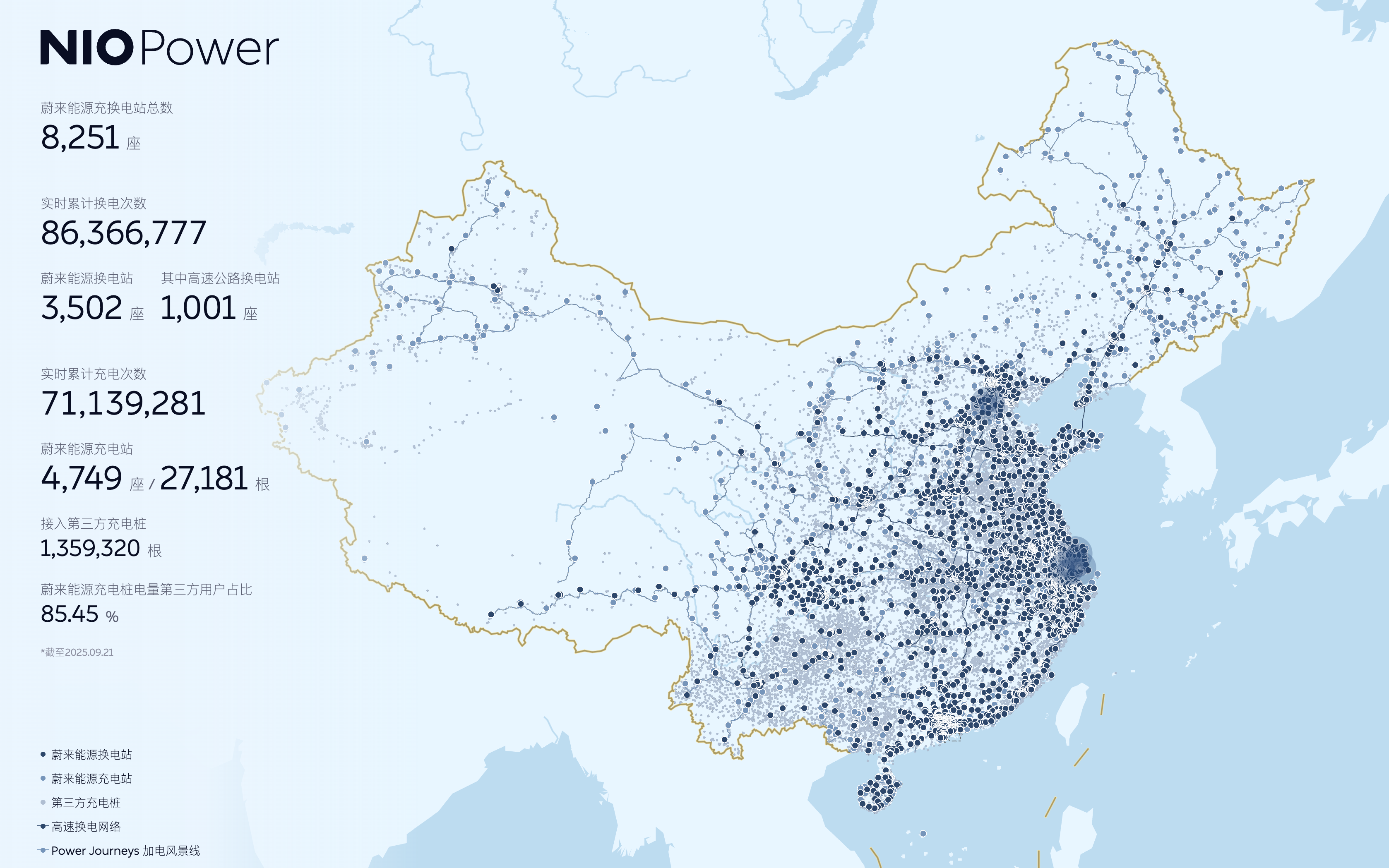
Li Bin’s “long-termism” seemed to be continuously expanding users’ travel boundaries through real money investments. I realized I needed to conduct a deep research on this company again, to figure out whether the recent stock price movements are a short-term rebound or the beginning of long-term value discovery.
So I reviewed NIO’s recent product roadmap and re-examined its three-brand strategy.
Before understanding it, like many others, I thought three brands would dilute resources—one brand hasn’t fully succeeded yet, and they’re launching three brands? Honestly, that was my first impression, and I wasn’t optimistic about ONVO and Firefly.
Because NIO’s past product design was decent, but users didn’t perceive enough explicit value, and it didn’t sufficiently design products targeting users’ high-perception needs. Meanwhile, too many configuration options, though satisfiable by their flexible manufacturing factory, somewhat affected delivery efficiency. So NIO didn’t generate good sales in the past for multiple reasons—product-related, marketing and pricing-related, and overall user purchase decision experience deficiencies.
But all this changed over the past year or so. These changes weren’t overnight but were demonstrated during this period based on long-term R&D and market feedback collection.
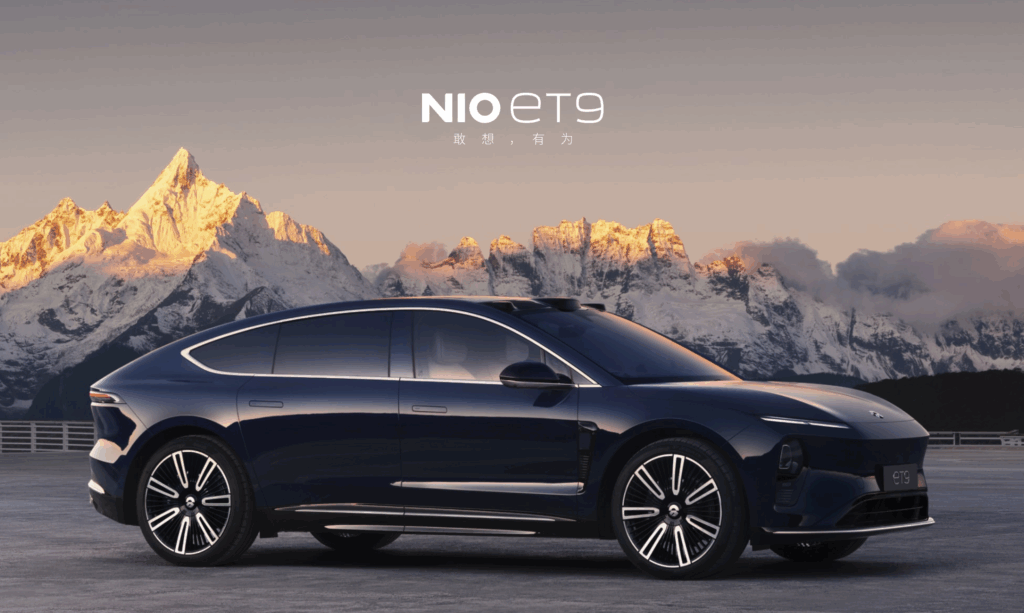
Through the ET9, NIO showcased the technical achievements from its past 6 billion yuan R&D investment, including self-developed chips and self-developed full-domain operating systems, and the systematic software-hardware achievements brought by electronic and electrical systems.
At the same time, from a series of activities and product planning, one can sense that NIO’s team now has faster pace, higher efficiency, and more accurate decision-making.
Core Investment Thesis: An Undervalued AI Software and Energy Ecosystem Company Under a High-End Hardware Brand
After deep research, my conclusion is: NIO is not a traditional automotive company, but an AI + Hardware + Energy ecosystem company based on world models.
The market still values it using traditional automotive static logic, potentially underestimating the network effects built by its unique technology path, brand assets, and infrastructure network.
With the arrival of China’s new energy market “pure electric inflection point” and the progress of its AI driving technology, NIO is at a critical juncture transitioning from value discovery to value reconstruction and value growth.
It may evolve from an undervalued automotive company into an important technology ecosystem platform company within the next 5-10 years.
Buying NIO means buying a new-era autonomous driving company with R&D technology assets, high-end brand, and original design—a platform enterprise that may become an intelligent mobility ecosystem infrastructure provider.
This isn’t a story requiring faith, but an investment hypothesis that can be verified with data and tested by time.
I. Technology Moat: Systematic Advantages from Full-Stack Self-Development
Let me share my findings: NIO’s technological advantages aren’t single-point breakthroughs, but systematic capabilities from full-stack self-development. This makes it more agile in technology iteration and begins converting technological advantages into cost advantages.
Hardware Level: From Original Architecture to Core Component Autonomy
Shenji Chip: Self-developed 5nm automotive-grade smart driving chip, achieving native optimization with self-developed algorithms, bringing significant single-vehicle cost savings. Just replacing 4 NVIDIA Orin-X chips with one Shenji NX9031 smart driving chip can save 20,000 yuan (reflected in selling price, including VAT and certain profit margins).
900V High-Voltage Platform: Industry-leading high-voltage architecture, bringing better charging efficiency and energy consumption control.
Original Chassis Design: Tianxing intelligent chassis integrates wire-controlled steering and full active suspension, while optimizing architecture specifically for battery swapping and high-voltage systems, laying a solid foundation for software-hardware deep collaboration through full self-development.
Software Level: End-to-End “World Model” and “Full-Domain Operating System”
World Model (NWM): NIO chose a “world model” path closer to AGI, which includes VLA capabilities and represents a more advanced paradigm.
Through AI learning and reasoning in various scenarios, it achieves technology iteration. NIO has become one of China’s first batch of pilot enterprises for intelligent connected vehicle access.
Full-Stack Operating System (SkyOS): Among Chinese automakers, it’s an early full-domain operating system, achieving complete vertical control from underlying hardware to user interface.
Infrastructure Level: Energy Network and Data Closed Loop
Battery Swap Network: Over 3,500 battery swap stations constitute energy infrastructure that competitors cannot replicate in the short term.
Data Closed Loop: Based on the “collective intelligence” system, it achieves full-scenario data accumulation and automatic annotation for battery swapping, driving, and safety, providing data support for its world model.
Market Validation of Battery Swap Route
Technology and Value Retention Advantages: Battery health monitoring and charging protection under the swap mode avoid fast-charging damage, keeping 7-8 year old early ES8/ES6 models still performing well. This decoupling of vehicle and battery lifespan may fundamentally improve vehicle lifetime usage and value retention.
Commercial Value: Sales performance of ONVO L60/L90 and new ES8 models shows increasing acceptance of battery swap value among mainstream household users.
II. Structural Opportunities Under the Pure Electric Inflection Point
2025 is a critical inflection year for China’s new energy vehicles, with penetration rate exceeding 50%, and consumer perception shifting from “reluctant choice” to “active preference.” In this historic transformation, NIO may benefit from the era’s dividends.
Brand Value Revaluation: Cognitive Shift from “Expensive” to “Valuable”
After years of market validation, early users’ long-term usage experience has proven NIO’s product quality and durability. From original design philosophy to driving safety considerations, from full lifecycle hardware planning to sufficient hardware redundancy—even first-generation products from seven or eight years ago can still continuously receive OTA software iterations. These constitute the foundation of NIO’s brand value. Its service experience creates differentiated value in the pure electric era, bringing high repurchase rates and brand loyalty.
From a business logic perspective, NIO is more like the “Apple of automobiles.” It has secured its position in high-end pure electric vehicles, giving users an experience similar to buying an iPhone—”slightly more expensive but indeed durable.”
Regarding brand premium, I believe this is a return based on quality and service. Quality has costs, and it’s normal business logic for enterprises to obtain reasonable gross margins.

From data comparison: Apple’s hardware gross margin is about 36%, Tesla’s vehicle gross margin is about 17.5%, while NIO’s past vehicle gross margin was only 10%. But from NT3.0’s new products L90 and new ES8, benefiting from overall self-developed cost reduction, supply chain efficiency improvement, and marginal cost reduction from sales volume, Li Bin revealed that gross margin can reach 20%.
If adhering to the philosophy of “top quality, mid-to-high pricing, supreme service,” NIO may achieve long-term sustainable development.
Release of Systematic Product Advantages
NIO’s product advantages aren’t single-point breakthroughs but systematic capabilities. The NT3.0 pure electric platform adopts 900V high-voltage architecture, reducing energy consumption performance.
More importantly, it supports both ultra-fast charging and allows users to choose battery swapping to avoid fast-charging damage to batteries—users can enjoy both the technical advantages of high-voltage platforms and avoid battery health concerns.
Meanwhile, NIO’s SkyOS system achieves full-domain control integration. For example, smart driving hardware can serve the cockpit—smart driving rear cameras can be used for streaming rearview mirrors. This full-domain electronic self-developed optimization brings spatial advantages, intelligence advantages, and weight advantages from removing fuel systems, which are being recognized and accepted by mainstream users.
Three-Brand Synergy: Technology Reuse and Cost Amortization Strategy
After in-depth research, I found that NIO’s three-brand strategy isn’t the “resource dilution” outsiders think, but a technology reuse and cost amortization strategy.
Shared Technology Base, Amortized R&D Costs: NIO, ONVO, and Firefly share the same core technology architecture—Shenji chip, SkyOS system, 900V high-voltage platform, battery swap technology, etc. This means NIO’s past 6 billion yuan R&D investment can generate value returns across three brands simultaneously, amortizing R&D costs.
Expanded User Coverage, Increased Market Opportunities:
- NIO Brand: Systematic originality + technology advantages beyond single-point leadership, covering 300,000-500,000 yuan high-end market
- ONVO Brand: Everything you have, I have too, plus I can swap batteries, covering 200,000-300,000 yuan mainstream family market
- Firefly Brand: Securing the automotive world’s Labubu positioning, covering 100,000-200,000 yuan young consumer market

This brand matrix allows NIO to reach more pure electric consumer groups, breaking through the ceiling of high-end niche markets.
Amplified Scale Effects, Emerging Cost Advantages: Three brands share supply chains, manufacturing systems, and battery swap networks. As total sales increase, fixed cost allocation per vehicle may decrease significantly. This is a structural cost advantage that traditional single-brand automakers find difficult to achieve.
Brand Value Transfer, Reduced Education Costs: The technology halo and service reputation of high-end NIO brand may transfer to ONVO and Firefly brands, reducing market education costs for new brands.
This “one technology set, three brands, full coverage” strategy allows NIO to enjoy technology dividends while expanding market opportunities and cost efficiency. This isn’t simple brand expansion but strategic positioning.
III. Multi-Level Valuation Enhancement Pathways
So my off-the-cuff analysis suggests NIO’s value revaluation may follow a clear, multi-layered pathway:
First Layer: Turnaround Recovery (Possibly Happening Now)
Financial Improvement: With scale cost reduction from NT3.0 platform and ONVO brand volume growth, Q4 may achieve profitability, gross margin continues improving toward 20%, and cash flow may turn positive.
Sales Growth: Monthly deliveries stabilize above 30,000-40,000 level, with NIO consolidating high-end market + ONVO successfully penetrating mass market + Firefly establishing domestic and overseas markets, jointly expanding user base. Quietly mentioning, NIO’s current planned annual capacity at Hefei F1/F2/F3 factories is 1 million vehicles. Li Bin has made many arrangements everywhere. Interested parties can calculate “future revenue” x potential market-to-sales ratio multiple. To understand NIO’s chess game, I also recommend learning about NIO Capital’s industrial chain investments.
Second Layer: Technology Value Revaluation (Possibly Happening Now)
Battery Swap Network Value Discovery: The battery swap network may transform from cost center to break-even then to profit center. Its business model as a “virtual power plant” participating in grid peak shaving and frequency regulation has been validated domestically and internationally.
R&D Technology Value Manifestation: As systematic technology advantages continue landing with products, the market may better understand NIO’s technology value.
Third Layer: Global Network Effects (Next 3-5 Years)
Overseas Market Expansion: With European market positioning and battery swap standard promotion, plus shifting from self-operation to dealer-focused overseas sales model, its global network effects may gradually emerge.
Fourth Layer: AI-Driven Valuation Reconstruction (Next 3-5 Years)
From Auto Company to AI Company: Differentiated advantages of “world model” technology begin market recognition, potentially driving software subscription revenue growth potential and AI technology commercialization output. As L3/L4 autonomous driving gradually commercializes, NIO’s valuation model may shift toward AI technology companies.
Fifth Layer: Ecosystem Platform Potential Form (Next 5-10 Years)
Infrastructure Value: Battery swap networks may become city-level energy infrastructure, data networks become components of smart cities, and autonomous driving fully enters thousands of households. NIO may evolve into an ecosystem platform company driven by hardware sales, technology services, and lifestyle services.
IV. Breaking Through Cognitive Fog: 10 Non-Consensus Q&As
Current market has some cognitive biases about NIO, which may actually present investment opportunities. Let me share my thoughts:
1. Q: Rejecting NIO as a company because of personal dislike for Li Bin?
A: This may confuse personal preferences with company fundamentals. Due to Li Bin’s past statements or performance during NIO’s lowest period, some people developed prejudices against him. But the fact is, Li Bin’s sincerity and long-termism are being recognized by more and more people.
Whether personally engaging with users or persisting in underlying technology investment during the most difficult 2019, it reflects an entrepreneur’s strategic determination. Truly understanding him may change perspectives. This personal-level cognitive gap may be one of the investment opportunities brought by market inefficiency.
2. Q: Battery swapping is heavy asset, money pit, destined to be unprofitable?
A: This may be a misunderstanding of the battery swap model. In fact, NIO Power may have profitability capability.
Good Charging Business Performance: NIO charging pile utilization rate reaches 13-14%, far exceeding the industry average of 6-8%, with estimated gross margin over 30%. 80% of its electricity serves non-NIO brands, making it a public energy service provider.
Clear Battery Swap Station Profit Path: Some Shanghai stations exceed 100 daily swaps, far above the 60-swap break-even point. More importantly, swap stations are energy storage units that can create value through peak-valley electricity price arbitrage and participating in grid peak shaving and frequency regulation. They’re not just energy replenishment facilities but may be key nodes in the future energy internet.
3. Q: NIO’s autonomous driving seems average, not first-tier?
A: “First-tier” itself is a vague subjective judgment. NIO’s strategy is software-hardware integration, future-oriented.
Hardware First: Whether early 4 Orin-X chips or current self-developed Shenji chips, NIO always reserves hardware redundancy for algorithm iterations in the next 3-5 years. Users should really focus on whether hardware supports long-cycle iterations, not just current software functions.
Path Choice: NIO chose a “world model” path closer to AGI, including VLA capabilities—a more advanced paradigm. It prioritizes using end-to-end models to improve active safety, which is a value choice and represents technical confidence.
Official Recognition: NIO successfully entered China’s first batch of pilot enterprises for intelligent connected vehicle access and road testing.
4. Q: What’s NIO’s actual industry position?
A: NIO is already an important participant in China’s high-end intelligent electric vehicles, with its industry position receiving national-level authoritative recognition.
Technology Benchmark: Self-developed wire-controlled steering, 5nm smart driving chip, and SkyOS operating system have all received praise from People’s Daily, CCTV, and other official media, evaluated as “autonomous and controllable, with chips and soul,” promoting industry leap from hardware stacking to underlying reconstruction.
Standard Setter: The Ministry of Industry and Information Technology has designated NIO to lead national battery swap standard formulation, with its swap network becoming a benchmark for national energy replenishment strategy.
Industrial Ecosystem Core: In Anhui, NIO has driven 143 industrial chain enterprises to establish presence, forming “zero-kilometer logistics” efficient collaboration, becoming an important force in local economy.
5. Q: What’s special about NIO’s vehicle design?
A: Original design is one of NIO’s core brand assets. Its design is led by Kris Tomasson, former BMW i-series design head, at the Munich Global Design Center, integrating Eastern philosophy with Western craftsmanship.
NIO adheres to “design-driven” philosophy, with its design language (like X-Bar, Double Dash) having high recognition and inheritance. This enables its products to maintain brand consistency and premium feel through iterations like Apple. For investors, this may be an important guarantee of brand vitality.
6. Q: How’s NIO’s actual product experience (TCO)?
A: Considering Total Cost of Ownership, NIO’s experience advantages may be more obvious. Its solid materials, convenient charging and swapping and service system, plus better value retention from battery-vehicle separation (battery degradation issues solved by swap network), may significantly reduce users’ long-term ownership costs.
I have a hypothesis: whether range-extended or other pure electric users, they may all ultimately expand NIO’s potential user pool, because NIO provides potentially superior long-term solutions.
7. Q: How to view NIO’s recent equity offering and potential financing?
A: I believe for Li Bin, successfully executing NIO’s grand strategy may be more important than how many shares he personally owns. When financing is needed to ensure success, he may choose to “get things done” rather than overly worry about short-term stock price impact. This determination with the end in mind may be a source of confidence for long-term investors.
8. Q: How to understand NIO’s “spending” approach and past low gross margins?
A: Looking back now, NIO may not have spent too much money, but spent it with foresight. Today’s technology dividends stem from yesterday’s investments.
R&D Expensing: NIO completely expenses all R&D investments including chip development. This means when these R&D achievements (like Shenji chips) convert to cost savings, they’ll directly reflect in gross margin improvements.
Entering Harvest Period: Li Bin’s confidence in long-term 20% gross margin stems from this. Supply chain efficiency improvement, R&D achievement conversion, and scale effects jointly drive the company into a possible technology harvest period, with cash generation capability potentially undergoing qualitative change.
9. Q: Will NIO go bankrupt?
A: Low probability.
Endogenous Cash Generation: The company may have entered a technology harvest period, with product strength, brand strength, and long-tail effects of swap network forming positive cycles.
External Financing Capability: Whether Middle Eastern sovereign fund strategic investment or public market equity offering capability, both prove NIO has financing ability needed to execute its long-term vision.
National Strategic Position: As battery swap national standard setter and representative of intelligent vehicle “technology sovereignty,” NIO has important industrial strategic value.
10. Q: In summary, what’s NIO’s biggest non-consensus opportunity?
A: The biggest opportunity may lie in cognitive arbitrage. Market has cognitive gaps about NIO’s vehicle design, its full lifecycle experience, its overall technology advantages, and even Li Bin personally.
When everyone thinks it’s a money-burning auto company, it may have already built a “vehicle + energy network + AI technology” three-stage rocket. Buying NIO means buying this potentially undervalued ticket to the future.
V. Risk Warnings and Uncertainties
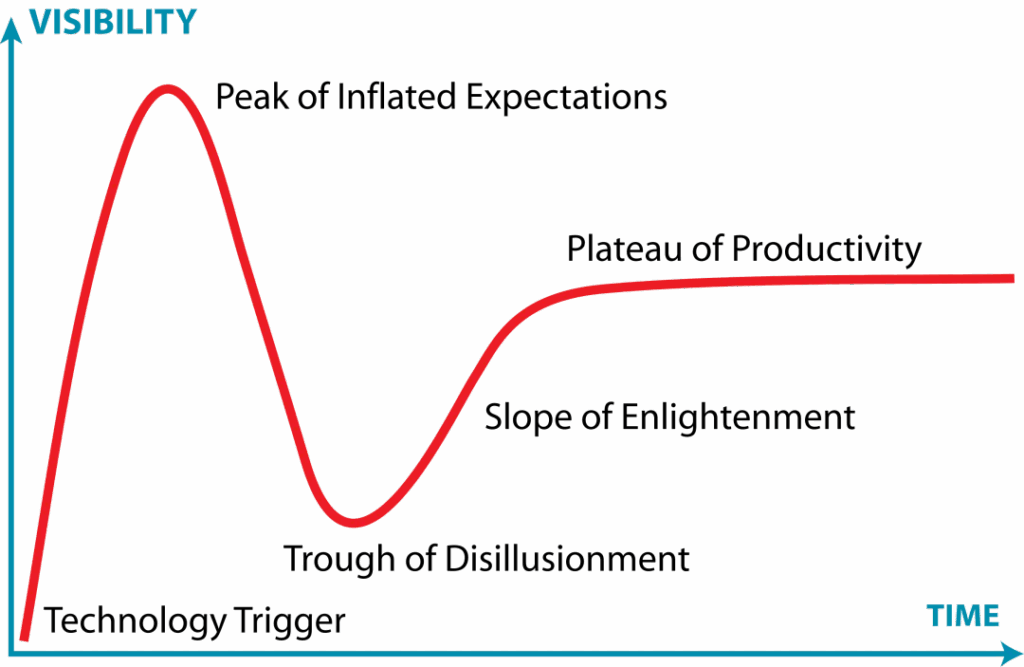
Investing in NIO is a choice requiring patience and vision, with significant risks. Essentially, this is innovative investment in early-stage technology innovation crossing the hype period and entering maturity.
For me, I prefer To C technology investment opportunities with communication advantages, and tend to choose the most liquid, consensus-rich/information-transparent leaders after market education, so NIO is among my choices.
But I must remind of several core risks:
Technology Path Uncertainty
Both battery swap standard promotion and world model technology paths have “betting on the right direction” risks. Though I think the probability is high, if judgment is wrong, the impact would be far-reaching.
Competitive Landscape Changes
Tesla’s price reduction impact, rise of domestic players like Huawei, BYD, Li Auto, XPeng, and traditional luxury brands’ electrification transformation may all reshape market patterns.
Financial and Operational Challenges
Cash flow pressure, overseas expansion uncertainty, supply chain risks, and other operational challenges still exist.
Macroeconomic Environment Impact
Policy changes, consumer preference shifts, economic cycle fluctuations, and other external factors cannot be ignored.
The key is dynamic tracking and rational judgment. Every investment has risks; the core is whether risks match returns. NIO’s investment logic is relatively clear, but variables in execution are also numerous, requiring continuous attention and timely adjustments.
Conclusion: Realistic Path to the Stars and Sea
NIO represents not just a change in transportation methods, but potentially a lifestyle upgrade. Through technology innovation, ecosystem construction, and service experience, it’s redefining the future of intelligent mobility.
After this round of deep research, I believe NIO may have passed through the most difficult “rooting” phase and is welcoming a “growing toward the sun” harvest period.
Its “gentle butcher” pricing strategy may be backed by deep technical confidence and cost control capabilities.
This may not be a company seeking survival, but one preparing to harvest the market. For investors, now may be a critical moment to bravely explore + reassess its investment value.
Besides that, time and patience are our greatest friends.
Disclaimer: The above content is written based on publicly available information, third-party research, and personal research thinking, and does not constitute any investment advice.
I don’t accept emotional arguments but welcome technical discussions based on facts and data, reasonable supplements, and different perspective additions.
For data and key conclusions mentioned in the article, readers should conduct their own research and make final judgments.